Mostrando las entradas con la etiqueta Diagnostic and Statistical Manual of Mental Disorders. Mostrar todas las entradas

23 mayo, 2013

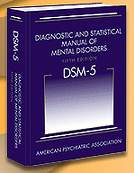
Opiniones sobre el DSM V

Con bastantes cambios, y nuevas redefiniciones que flexibiilizan aún más las que ya tenía el DSM IV. En este momento, muchos psiquiatras, aún argentinos, están participando de un Congreso Internacional de Psiquiatra en USA. Sin dudas, la Asociación Psiquiatrica Americana (nosotros también somos americanos ) habrá de presentar esta joya. Asi como lo hacen en las reuniones de ASCO ( Cáncer ), todos los años. 
No es la única clasificación que existe, la OMS tiene su propia clasificación de problemas mentales, pero la mayoria del mundo se rige hoy por este documento. Tanto es asi, que en varias Obras Sociales y Prepagas, de nuestro pais, los psiquiatras deben regirse por ella y codificar acorde a este manual. Caso contrario no les pagan las consultas. 
Trastornos mundanos de la existencia, han sido aún más medicalizados. Y a nadie escapa la estrecha relación que la Industria Farmacéutica tiene con ese manual. Un código......un medicamento. Si hasta el propio "descubridor" del ADD declaró hace unos meses, antes de morir, que era una entidad inventada. http://medicina-general-familiar.blogspot.com.ar/2013/05/inventor-of-adhds-deathbed-confession.html
Esto hoy, ha llegado al extremo que la propia agencia de Salud Mental de USA, no acepte este manual cómo válido. 
Incluso puede leerse cómo ya el diagnóstico de depresión con el DSM IV, sobrestimaba su valor, y sólo un 39% de un estudio de más de 5000 personas demostró que realmente padecian una depresión mayor. http://medicina-general-familiar.blogspot.com.ar/2013/05/depression-overdiagnosed-and.html
Mientras tanto, y fuera de toda consideración política, el Jefe de Gobierno de la Ciudad de Buenos Aires, no tuvo miramientos contra talleres psicoterápicos ( más alla que hay poco escrito sobre su efectividad ), y lo hizo con una represión salvaje, que afectó no solo a personal de salud, sino también a pacientes. No creo que Macri sepa de que se trata, pero con estos actos está siendo funcional a la propia industria.
Quizás también, y en forma más seria de lo que se está haciendo, habria que repensar si instituciones como el Borda o el Moyano. Un lugar dónde casi todos pasamos aunque mas no sea siendo estudiantes. Es más un refugio de gente pobre, y asi como lo hizo Italia hace muchos años pensar en la desmanicolización.
Esto no sólo vale para estos lugares. Quién haya visitado más de un geriátrico, podrá ver también la forma en que se usa indiscriminadamente medicamentos psicotropicos para que nuestros viejos no molesten. Y ver a más de uno con sindrome parkinsoniano, no por la edad, sino por los efectos adversos de algunas de las medicaciónes más populares que se les da. 
Con un sindrome gripal encima, sepan disculpar tanta ignorancia. Por ello no he respondi algunos mails, siempre prefiero que los comentarios sean en el  blog, pero poca gente lo hace, o lo hace como anónimo. 
Tambien, quiero resaltar que no todos estamos de acuerdo en esto. Sobre todo en pediatria, aparte de los psiquiatras. Para muestra va la opinión de Javier, desde Pediatria Basada en Pruebas, que por cierto, y cómo siempre, se ha documentado bastante bien.   
Disculpas a los que ya están en la lista de fb https://www.facebook.com/groups/informacionmedica/ pero creo que valia la pena explayarme un poco más, por fuera de lo que es mi blog.
Enhanced by Zemanta

20 mayo, 2013

Depression Overdiagnosed and Overtreated in U.S. Adults


 Source: Practice update

Depression Overdiagnosed and Overtreated in U.S. Adults

IMNG Medical Media, 2013 May 02, M Rajaraman


Commentary by

Addressing and treating behavioral and mental health concerns in patients are part of the daily clinical practice of the majority of primary care physicians. It is likely accurate that depression is over diagnosed and antidepressants are overused. However, with limited mental health resources, the use of these medications indeed rises as primary care physicians seek to provide some treatment options for their patients. The increased biopsychosocial demands experienced by patients, the increased time constraints on physicians, and the scarcity of community behavioral and mental health resources highlight an urgent need to explore other models of care, such as the medical home, and to invest in the expansion of our behavioral and mental health services and providers. This study also underscores the potential utility of validated depression-screening tools that are quick and easy to use, such as the Patient Health Questionnaire-9 (PHQ-9). Incorporating these tools in the clinical encounter may help primary care physicians diagnose their depressed patients and facilitate a more informed treatment decision and plan.


Depression is frequently overdiagnosed and overtreated in American adults, according to a national survey study.
The study explored whether patients identified as depressed by their clinicians also met the DSM-IV diagnostic criteria for 12-month major depressive episodes (MDE). Results showed that of the 5,639 participants with clinician-identified depression, only 38.4% actually met the MDE criteria. Additionally, a majority of participants reported using prescribed psychiatric medications, regardless of whether they met MDE conditions.
“This finding highlights the growing trends in prescription and use of psychiatric medications, and especially antidepressants, in the USA, even in the absence of a psychiatric diagnosis,” wrote study author Dr. Ramin Mojtabai of the department of mental health at Johns Hopkins Bloomberg School of Public Health, Baltimore.
A sample of adult participants was drawn from the 2009 and 2010 National Survey of Drug Use and Health (NSDUH). Participants completed an assessment in the form of a computer-assisted in-person interview to determine whether they met DSM-IV criteria for major depressive episodes. Using questions derived from the Composite International Diagnostic Interview (CIDI) from the National Comorbidity Survey Replication, participants had to meet 5 of 9 symptom criteria and the DSM-IV clinical significance criteria (distress or impairment in functioning).
In addition to diagnostic criteria for depression, participants also were asked to report any inpatient or outpatient treatment or medications sought and prescribed over the past 12 months. Demographic information, such as education, general health, and employment status, also was collected.
Results showed that adults in the groups aged 35-49 years and 65 years and older were less likely to meet the 12-month MDE criteria than were adults aged 18-25 years.
“In contrast, participants who were out of the workforce, those who were divorced or separated, the more educated and those with poorer self-rated health were more likely to meet the 12-month MDE criteria,” Dr. Mojtabai wrote.
He added that the rate of false-positive diagnosis found in this study echoes that of prior research, and that numerous factors could contribute to this high rate, such as a generally low incidence of depression in community settings, a lack of clinician knowledge about diagnostic criteria, and “ambiguity regarding subthreshold syndromes.”
Dr. Mojtabai noted a few limitations to this study. First, he speculated that the true prevalence of clinician-diagnosed depression is likely much higher than is estimated in this study, as many doctors might not share their diagnostic impressions with patients. Second, he cautioned that structured interviews and clinician diagnoses are measures of “imperfect sensitivity.” Third, the type of doctor was not specified in the NSDUH survey used to recruit participants. Fourth, some patients diagnosed with depression might in fact have another disorder, such as anxiety or adjustment disorder, which might benefit from antidepressant medication. And lastly, some adults with depression might require long-term treatment to prevent recurrence after remission.
He mentioned a more vigilant approach to diagnosing mental health disorders, originally suggested by Laura Batstra, Ph.D., and Dr. Allen Frances, “which allows clinicians to avoid labeling subthreshold symptoms and mild conditions with psychiatric diagnoses” and encourages the use of less intense psychological interventions when appropriate (Psychother. Psychosom. 2012;81:5-10).
Dr. Mojtabai explained that this study underscores the challenge of accurately diagnosing mental disorders, and as primary care starts to play a larger role in mental health care, special priority should be given to improved diagnosis and treatment of psychiatric conditions.
Dr. Mojtabai disclosed receiving consulting fees from Lundbeck Pharmaceuticals.
Enhanced by Zemanta

12 mayo, 2013

Medicine's big new battleground: does mental illness really exist?

Published by the American Psychiatric Associat...
Published by the American Psychiatric Association, the DSM-IV-TR provides a common language and standard criteria for the classification of mental disorders. (Photo credit: Wikipedia)
Source: http://www.guardian.co.uk/
The latest edition of DSM, the influential American dictionary of psychiatry, says that shyness in children, depression after bereavement, even internet addiction can be classified as mental disorders. It has provoked a professional backlash, with some questioning the alleged role of vested interests in diagnosis.
It has the distinctly uncatchy, abbreviated title DSM-5, and is known to no one outside the world of mental health.
But, even before its publication a week on Wednesday, the fifth edition of the Diagnostic and Statistical Manual, psychiatry's dictionary of disorders, has triggered a bitter row that stretches across the Atlantic and has fuelled a profound debate about how modern society should treat mental disturbance.
Critics claim that the American Psychiatric Association's increasingly voluminous manual will see millions of people unnecessarily categorised as having psychiatric disorders. For example, shyness in children, temper tantrums and depression following the death of a loved one could become medical problems, treatable with drugs. So could internet addiction.
Inevitably such claims have given ammunition to psychiatry's critics, who believe that many of the conditions are simply inventions dreamed up for the benefit of pharmaceutical giants.
A disturbing picture emerges of mutual vested interests, of a psychiatric industry in cahoots with big pharma. As the writer, Jon Ronson, only half-joked in a recent TED talk: "Is it possible that the psychiatric profession has a strong desire to label things that are essential human behaviour as a disorder?"
Psychiatry's supporters retort that such suggestions are clumsy, misguided and unhelpful, and complain that the much-hyped publication of the manual has become an excuse to reheat tired arguments to attack their profession.
But even psychiatry's defenders acknowledge that the manual has its problems. Allen Frances, a professor of psychiatry and the chair of the DSM-4 committee, used his blog to attack the production of the new manual as "secretive, closed and sloppy", and claimed that it "includes new diagnoses and reductions in thresholds for old ones that expand the already stretched boundaries of psychiatry and threaten to turn diagnostic inflation into hyperinflation".
Others in the mental health field have gone even further in their criticism. Thomas R Insel, director of the National Institute of Mental Health, the American government's leading agency on mental illness research and prevention, recently attacked the manual's "validity".
And now, in a significant new attack, the very nature of disorders identified by psychiatry has been thrown into question. In an unprecedented move for a professional body, the Division of Clinical Psychology (DCP), which represents more than 10,000 practitioners and is part of the distinguished British Psychological Society, will tomorrow publish a statement calling for the abandonment of psychiatric diagnosis and the development of alternatives which do not use the language of "illness" or "disorder".
The statement claims: "Psychiatric diagnosis is often presented as an objective statement of fact, but is, in essence, a clinical judgment based on observation and interpretation of behaviour and self-report, and thus subject to variation and bias."
The language may be arcane, but the implication is clear. According to the DCP, "diagnoses such as schizophrenia, bipolar disorder, personality disorder, attention deficit hyperactivity disorder, conduct disorders and so on" are of "limited reliability and questionable validity".
Diagnosis is often described as the holy grail of psychiatry. Without it, psychiatry's foundations crumble. For this reason Mary Boyle, emeritus professor at the Univerity of East London, believes that the impact of the DCP's statement marks a dramatic shift in the mental health debate.
"The statement isn't just an account of the many problems of psychiatric diagnosis and the lack of evidence to support it," she said. "It's a call for a completely different way of thinking about mental health problems, away from the idea that they are illnesses with primarily biological causes."
Psychiatrists say that such claims have been made many times before and ignore mountains of peer-reviewed papers about the importance that biological factors play in determining mental health, including significant work in the field of genetics. It also, they say, misrepresents psychiatry's position by ignoring its emphasis on the impact of the social environment on mental health.
Most psychiatrists concede that diagnosis of psychiatric disorder is not perfect. But, as Harold S Koplewicz, a leading child and adolescent psychiatrist, explained in an article for the Huffington Post, "those lists of behaviours in the DSM, and other rating scales we use, are tools to help us look at behaviour as objectively as possible, to find the patterns and connections that can lead to better understanding and treatment".
Independent experts also say that it is hard to see how the world of mental health could function without diagnosis. "We know that, for many people affected by a mental health problem, receiving a diagnosis enabled by diagnostic documents like the DSM-5 can be extremely helpful," said Paul Farmer, chief executive of the mental health charity Mind. "A diagnosis can provide people with appropriate treatments, and could give the person access to other support and services, including benefits."
But even Farmer acknowledged that diagnosis is imperfect. "For example it takes, on average, 10 years before a person with bipolar disorder gets a correct diagnosis, which comes with a number of mental and physical health implications, such as side-effects from the wrong medication," he said.
But now the DCP has transformed the debate about diagnosis by claiming that it is not only unscientific but unhelpful and unnecessary.
"Strange though it may sound, you do not need a diagnosis to treat people with mental health problems," said Dr Lucy Johnstone, a consultant clinical psychologist who helped to draw up the DCP's statement.
"We are not denying that these people are very distressed and in need of help. However, there is no evidence that these experiences are best understood as illnesses with biological causes. On the contrary, there is now overwhelming evidence that people break down as a result of a complex mix of social and psychological circumstances – bereavement and loss, poverty and discrimination, trauma and abuse."
Eleanor Longden, who hears voices and was told she was a schizophrenic who would be better off having cancer as "it would be easier to cure", explains that her breakthrough came after a meeting with a psychiatrist who asked her to tell him a bit about herself. In a paper for the academic journal, Psychosis, Longden recalled: "I just looked at him and said 'I'm Eleanor, and I'm a schizophrenic'."
Longden writes: "And in his quiet, Irish voice he said something very powerful, 'I don't want to know what other people have told you about yourself, I want to know about you.'
"It was the first time that I had been given the chance to see myself as a person with a life story, not as a genetically determined schizophrenic with aberrant brain chemicals and biological flaws and deficiencies that were beyond my power to heal."
Longden, who is pursuing a career in academia and is now a campaigner against diagnosis, views this conversation as a crucial first step in the healing process that took her off medication. "I am proud to be a voice-hearer," she writes. "It is an incredibly special and unique experience."
Hers is an inspirational story. But to focus on one person's experiences would be to ignore the testimonies of others who believe that their mental distress has biomedical roots. Indeed, many people report that they can see no clear reason for their distress and firmly believe their life stories have little bearing on their mental state.
Nevertheless the DCP believes the world of mental health treatment would benefit from a "paradigm shift" so that it focused less on the biological aspects of mental health and more on the personal and the social.
"In essence, instead of asking 'What is wrong with you?', we need to ask 'What has happened to you?'," Johnstone said. "Once we know that, we can draw on psychological evidence to show how life events and the sense that people make of them have led to the current difficulties."
A shift away from a biological focus would give succour to psychiatry's critics, who question society's reliance on the use of drugs or interventions such as electroconvulsive therapy to treat psychiatric breakdown.
Prescriptions of antidepressants increased nearly 30% in England between 2008 and 2011, the latest available data.
A recent article in the online edition of the British Medical Journal suggested "that only one in seven people actually benefits" from antidepressants and claimed that three-quarters of the experts who wrote the definitions of mental illness had links to drug companies.
Professor Sir Simon Wessely, chair of Psychological Medicine at King's College London (KCL), argues that his profession has always emphasised the need to "look at the whole person, and indeed beyond the person to their family, and to society", and that claims psychiatry is being "taken over by the biologists" are unfounded.
This defence, which will be outlined at a major international conference on the impact of DSM-5, to be held at KCL at the beginning of June, is often lost in a shrill debate.
Indeed, it is noticeable just how vocal psychiatry's critics are becoming ahead of the publication of DSM-5. In an attempt to pour oil on troubled waters, Professor Sue Bailey, president of the Royal College of Psychiatrists, conceded that "many of the criticisms that are levelled at DSM" were valid but warned that the row was "distracting us from the real challenge, which is providing high-quality mental health services and treatment to patients and carers".
Bailey insisted the manual's publication "won't have any direct influence on the diagnosis of mental illness in the NHS". But it will frame the wider debate about how people see mental health. As Wessely acknowledged, psychiatry's critics will seize on the manual's "daft" new categories of mental disorder to bolster claims that the profession is "medicalising normality".
There is an irony here. Psychiatry lies wounded and much of the damage appears to be self-inflicted. The emotional scars may take decades to heal.

How the Diagnostic and Statistical Manual of Mental Disorders is changing


IN THE NEW MANUAL, DSM-5:
■ Disruptive mood dysregulation disorder, or DMDD, for those diagnosed with abnormally severe and frequent temper tantrums.
■ Binge-eating disorder. For those who eat to excess 12 times in three months.
■ Hoarding disorder, defined as "persistent difficulty discarding or parting with possessions, regardless of actual value".
■ Oppositional defiant disorder, described by one critic as a condition afflicting children who say "no" to their parents more than a certain number of times.
OUT OF THE MANUAL
The term "gender identity disorder", for children and adults who strongly believe they were born the wrong gender, is being replaced with "gender dysphoria" to remove the stigma attached to the word "disorder". Experts liken the switch to the removal of homosexuality as a disorder in the 1973 edition.
AND THE FUTURE?
Hypersexuality and internet addiction will both be included in a section that suggests they could become disorders following further research.
Enhanced by Zemanta

07 mayo, 2013

National Institute of Mental Health abandoning the DSM

Source: http://mindhacks.com

In a potentially seismic move, the National Institute of Mental Health – the world’s biggest mental health research funder, has announced only two weeks before the launch of the DSM-5 diagnostic manual that it will be “re-orienting its research away from DSM categories”.
In the announcement, NIMH Director Thomas Insel says the DSM lacks validity and that “patients with mental disorders deserve better”.
This is something that will make very uncomfortable reading for the American Psychiatric Association as they trumpet what they claim is the ‘future of psychiatric diagnosis’ only two weeks before it hits the shelves.
As a result the NIMH will now be preferentially funding research that does not stick to DSM categories:

Going forward, we will be supporting research projects that look across current categories – or sub-divide current categories – to begin to develop a better system. What does this mean for applicants? Clinical trials might study all patients in a mood clinic rather than those meeting strict major depressive disorder criteria. Studies of biomarkers for “depression” might begin by looking across many disorders with anhedonia or emotional appraisal bias or psychomotor retardation to understand the circuitry underlying these symptoms. What does this mean for patients? We are committed to new and better treatments, but we feel this will only happen by developing a more precise diagnostic system.
As an alternative approach, Insel suggests the Research Domain Criteria (RDoC) project, which aims to uncover what it sees as the ‘component parts’ of psychological dysregulation by understanding difficulties in terms of cognitive, neural and genetic differences.
For example, difficulties with regulating the arousal system might be equally as involved in generating anxiety in PTSD as generating manic states in bipolar disorder.
Of course, this ‘component part’ approach is already a large part of mental health research but the RDoC project aims to combine this into a system that allows these to be mapped out and integrated.
It’s worth saying that this won’t be changing how psychiatrists treat their patients any time soon. DSM-style disorders will still be the order of the day, not least because a great deal of the evidence for the effectiveness of medication is based on giving people standard diagnoses.
It is also true to say that RDoC is currently little more than a plan at the moment – a bit like the Mars mission: you can see how it would be feasible but actually getting there seems a long way off. In fact, until now, the RDoC project has largely been considered to be an experimental project in thinking up alternative approaches.
The project was partly thought to be radical because it has many similarities to the approach taken by scientific critics of mainstream psychiatry who have argued for a symptom-based approach to understanding mental health difficulties that has often been rejected by the ‘diagnoses represent distinct diseases’ camp.
The NIMH has often been one of the most staunch supporters of the latter view, so the fact that it has put the RDoC front and centre is not only a slap in the face for the American Psychiatric Association and the DSM, it also heralds a massive change in how we might think of mental disorders in decades to come.
 

Link to NIMH announcement ‘Transforming Diagnosis’.
Enhanced by Zemanta