|
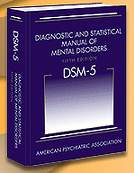
| Published by the American Psychiatric Association, the DSM-IV-TR provides a common language and standard criteria for the classification of mental disorders. (Photo credit: Wikipedia) |
Source: http://www.guardian.co.uk/
The latest edition of DSM, the influential American dictionary of psychiatry, says that shyness in children, depression after bereavement, even internet addiction can be classified as mental disorders. It has provoked a professional backlash, with some questioning the alleged role of vested interests in diagnosis.
The latest edition of DSM, the influential American dictionary of psychiatry, says that shyness in children, depression after bereavement, even internet addiction can be classified as mental disorders. It has provoked a professional backlash, with some questioning the alleged role of vested interests in diagnosis.
It has the distinctly uncatchy, abbreviated title DSM-5, and is known to no one outside the world of mental health.
But, even before its publication a week on Wednesday, the fifth edition of the Diagnostic and Statistical Manual, psychiatry's dictionary of disorders, has triggered a bitter row that stretches across the Atlantic and has fuelled a profound debate about how modern society should treat mental disturbance.
Critics claim that the American Psychiatric Association's increasingly voluminous manual will see millions of people unnecessarily categorised as having psychiatric disorders. For example, shyness in children, temper tantrums and depression following the death of a loved one could become medical problems, treatable with drugs. So could internet addiction.
Inevitably such claims have given ammunition to psychiatry's critics, who believe that many of the conditions are simply inventions dreamed up for the benefit of pharmaceutical giants.
A disturbing picture emerges of mutual vested interests, of a psychiatric industry in cahoots with big pharma. As the writer, Jon Ronson, only half-joked in a recent TED talk: "Is it possible that the psychiatric profession has a strong desire to label things that are essential human behaviour as a disorder?"
Psychiatry's supporters retort that such suggestions are clumsy, misguided and unhelpful, and complain that the much-hyped publication of the manual has become an excuse to reheat tired arguments to attack their profession.
But even psychiatry's defenders acknowledge that the manual has its problems. Allen Frances, a professor of psychiatry and the chair of the DSM-4 committee, used his blog to attack the production of the new manual as "secretive, closed and sloppy", and claimed that it "includes new diagnoses and reductions in thresholds for old ones that expand the already stretched boundaries of psychiatry and threaten to turn diagnostic inflation into hyperinflation".
Others in the mental health field have gone even further in their criticism. Thomas R Insel, director of the National Institute of Mental Health, the American government's leading agency on mental illness research and prevention, recently attacked the manual's "validity".
And now, in a significant new attack, the very nature of disorders identified by psychiatry has been thrown into question. In an unprecedented move for a professional body, the Division of Clinical Psychology (DCP), which represents more than 10,000 practitioners and is part of the distinguished British Psychological Society, will tomorrow publish a statement calling for the abandonment of psychiatric diagnosis and the development of alternatives which do not use the language of "illness" or "disorder".
The statement claims: "Psychiatric diagnosis is often presented as an objective statement of fact, but is, in essence, a clinical judgment based on observation and interpretation of behaviour and self-report, and thus subject to variation and bias."
The language may be arcane, but the implication is clear. According to the DCP, "diagnoses such as schizophrenia, bipolar disorder, personality disorder, attention deficit hyperactivity disorder, conduct disorders and so on" are of "limited reliability and questionable validity".
Diagnosis is often described as the holy grail of psychiatry. Without it, psychiatry's foundations crumble. For this reason Mary Boyle, emeritus professor at the Univerity of East London, believes that the impact of the DCP's statement marks a dramatic shift in the mental health debate.
"The statement isn't just an account of the many problems of psychiatric diagnosis and the lack of evidence to support it," she said. "It's a call for a completely different way of thinking about mental health problems, away from the idea that they are illnesses with primarily biological causes."
Psychiatrists say that such claims have been made many times before and ignore mountains of peer-reviewed papers about the importance that biological factors play in determining mental health, including significant work in the field of genetics. It also, they say, misrepresents psychiatry's position by ignoring its emphasis on the impact of the social environment on mental health.
Most psychiatrists concede that diagnosis of psychiatric disorder is not perfect. But, as Harold S Koplewicz, a leading child and adolescent psychiatrist, explained in an article for the Huffington Post, "those lists of behaviours in the DSM, and other rating scales we use, are tools to help us look at behaviour as objectively as possible, to find the patterns and connections that can lead to better understanding and treatment".
Independent experts also say that it is hard to see how the world of mental health could function without diagnosis. "We know that, for many people affected by a mental health problem, receiving a diagnosis enabled by diagnostic documents like the DSM-5 can be extremely helpful," said Paul Farmer, chief executive of the mental health charity Mind. "A diagnosis can provide people with appropriate treatments, and could give the person access to other support and services, including benefits."
But even Farmer acknowledged that diagnosis is imperfect. "For example it takes, on average, 10 years before a person with bipolar disorder gets a correct diagnosis, which comes with a number of mental and physical health implications, such as side-effects from the wrong medication," he said.
But now the DCP has transformed the debate about diagnosis by claiming that it is not only unscientific but unhelpful and unnecessary.
"Strange though it may sound, you do not need a diagnosis to treat people with mental health problems," said Dr Lucy Johnstone, a consultant clinical psychologist who helped to draw up the DCP's statement.
"We are not denying that these people are very distressed and in need of help. However, there is no evidence that these experiences are best understood as illnesses with biological causes. On the contrary, there is now overwhelming evidence that people break down as a result of a complex mix of social and psychological circumstances – bereavement and loss, poverty and discrimination, trauma and abuse."
Eleanor Longden, who hears voices and was told she was a schizophrenic who would be better off having cancer as "it would be easier to cure", explains that her breakthrough came after a meeting with a psychiatrist who asked her to tell him a bit about herself. In a paper for the academic journal, Psychosis, Longden recalled: "I just looked at him and said 'I'm Eleanor, and I'm a schizophrenic'."
Longden writes: "And in his quiet, Irish voice he said something very powerful, 'I don't want to know what other people have told you about yourself, I want to know about you.'
"It was the first time that I had been given the chance to see myself as a person with a life story, not as a genetically determined schizophrenic with aberrant brain chemicals and biological flaws and deficiencies that were beyond my power to heal."
Longden, who is pursuing a career in academia and is now a campaigner against diagnosis, views this conversation as a crucial first step in the healing process that took her off medication. "I am proud to be a voice-hearer," she writes. "It is an incredibly special and unique experience."
Hers is an inspirational story. But to focus on one person's experiences would be to ignore the testimonies of others who believe that their mental distress has biomedical roots. Indeed, many people report that they can see no clear reason for their distress and firmly believe their life stories have little bearing on their mental state.
Nevertheless the DCP believes the world of mental health treatment would benefit from a "paradigm shift" so that it focused less on the biological aspects of mental health and more on the personal and the social.
"In essence, instead of asking 'What is wrong with you?', we need to ask 'What has happened to you?'," Johnstone said. "Once we know that, we can draw on psychological evidence to show how life events and the sense that people make of them have led to the current difficulties."
A shift away from a biological focus would give succour to psychiatry's critics, who question society's reliance on the use of drugs or interventions such as electroconvulsive therapy to treat psychiatric breakdown.
Prescriptions of antidepressants increased nearly 30% in England between 2008 and 2011, the latest available data.
A recent article in the online edition of the British Medical Journal suggested "that only one in seven people actually benefits" from antidepressants and claimed that three-quarters of the experts who wrote the definitions of mental illness had links to drug companies.
Professor Sir Simon Wessely, chair of Psychological Medicine at King's College London (KCL), argues that his profession has always emphasised the need to "look at the whole person, and indeed beyond the person to their family, and to society", and that claims psychiatry is being "taken over by the biologists" are unfounded.
This defence, which will be outlined at a major international conference on the impact of DSM-5, to be held at KCL at the beginning of June, is often lost in a shrill debate.
Indeed, it is noticeable just how vocal psychiatry's critics are becoming ahead of the publication of DSM-5. In an attempt to pour oil on troubled waters, Professor Sue Bailey, president of the Royal College of Psychiatrists, conceded that "many of the criticisms that are levelled at DSM" were valid but warned that the row was "distracting us from the real challenge, which is providing high-quality mental health services and treatment to patients and carers".
Bailey insisted the manual's publication "won't have any direct influence on the diagnosis of mental illness in the NHS". But it will frame the wider debate about how people see mental health. As Wessely acknowledged, psychiatry's critics will seize on the manual's "daft" new categories of mental disorder to bolster claims that the profession is "medicalising normality".
There is an irony here. Psychiatry lies wounded and much of the damage appears to be self-inflicted. The emotional scars may take decades to heal.
But, even before its publication a week on Wednesday, the fifth edition of the Diagnostic and Statistical Manual, psychiatry's dictionary of disorders, has triggered a bitter row that stretches across the Atlantic and has fuelled a profound debate about how modern society should treat mental disturbance.
Critics claim that the American Psychiatric Association's increasingly voluminous manual will see millions of people unnecessarily categorised as having psychiatric disorders. For example, shyness in children, temper tantrums and depression following the death of a loved one could become medical problems, treatable with drugs. So could internet addiction.
Inevitably such claims have given ammunition to psychiatry's critics, who believe that many of the conditions are simply inventions dreamed up for the benefit of pharmaceutical giants.
A disturbing picture emerges of mutual vested interests, of a psychiatric industry in cahoots with big pharma. As the writer, Jon Ronson, only half-joked in a recent TED talk: "Is it possible that the psychiatric profession has a strong desire to label things that are essential human behaviour as a disorder?"
Psychiatry's supporters retort that such suggestions are clumsy, misguided and unhelpful, and complain that the much-hyped publication of the manual has become an excuse to reheat tired arguments to attack their profession.
But even psychiatry's defenders acknowledge that the manual has its problems. Allen Frances, a professor of psychiatry and the chair of the DSM-4 committee, used his blog to attack the production of the new manual as "secretive, closed and sloppy", and claimed that it "includes new diagnoses and reductions in thresholds for old ones that expand the already stretched boundaries of psychiatry and threaten to turn diagnostic inflation into hyperinflation".
Others in the mental health field have gone even further in their criticism. Thomas R Insel, director of the National Institute of Mental Health, the American government's leading agency on mental illness research and prevention, recently attacked the manual's "validity".
And now, in a significant new attack, the very nature of disorders identified by psychiatry has been thrown into question. In an unprecedented move for a professional body, the Division of Clinical Psychology (DCP), which represents more than 10,000 practitioners and is part of the distinguished British Psychological Society, will tomorrow publish a statement calling for the abandonment of psychiatric diagnosis and the development of alternatives which do not use the language of "illness" or "disorder".
The statement claims: "Psychiatric diagnosis is often presented as an objective statement of fact, but is, in essence, a clinical judgment based on observation and interpretation of behaviour and self-report, and thus subject to variation and bias."
The language may be arcane, but the implication is clear. According to the DCP, "diagnoses such as schizophrenia, bipolar disorder, personality disorder, attention deficit hyperactivity disorder, conduct disorders and so on" are of "limited reliability and questionable validity".
Diagnosis is often described as the holy grail of psychiatry. Without it, psychiatry's foundations crumble. For this reason Mary Boyle, emeritus professor at the Univerity of East London, believes that the impact of the DCP's statement marks a dramatic shift in the mental health debate.
"The statement isn't just an account of the many problems of psychiatric diagnosis and the lack of evidence to support it," she said. "It's a call for a completely different way of thinking about mental health problems, away from the idea that they are illnesses with primarily biological causes."
Psychiatrists say that such claims have been made many times before and ignore mountains of peer-reviewed papers about the importance that biological factors play in determining mental health, including significant work in the field of genetics. It also, they say, misrepresents psychiatry's position by ignoring its emphasis on the impact of the social environment on mental health.
Most psychiatrists concede that diagnosis of psychiatric disorder is not perfect. But, as Harold S Koplewicz, a leading child and adolescent psychiatrist, explained in an article for the Huffington Post, "those lists of behaviours in the DSM, and other rating scales we use, are tools to help us look at behaviour as objectively as possible, to find the patterns and connections that can lead to better understanding and treatment".
Independent experts also say that it is hard to see how the world of mental health could function without diagnosis. "We know that, for many people affected by a mental health problem, receiving a diagnosis enabled by diagnostic documents like the DSM-5 can be extremely helpful," said Paul Farmer, chief executive of the mental health charity Mind. "A diagnosis can provide people with appropriate treatments, and could give the person access to other support and services, including benefits."
But even Farmer acknowledged that diagnosis is imperfect. "For example it takes, on average, 10 years before a person with bipolar disorder gets a correct diagnosis, which comes with a number of mental and physical health implications, such as side-effects from the wrong medication," he said.
But now the DCP has transformed the debate about diagnosis by claiming that it is not only unscientific but unhelpful and unnecessary.
"Strange though it may sound, you do not need a diagnosis to treat people with mental health problems," said Dr Lucy Johnstone, a consultant clinical psychologist who helped to draw up the DCP's statement.
"We are not denying that these people are very distressed and in need of help. However, there is no evidence that these experiences are best understood as illnesses with biological causes. On the contrary, there is now overwhelming evidence that people break down as a result of a complex mix of social and psychological circumstances – bereavement and loss, poverty and discrimination, trauma and abuse."
Eleanor Longden, who hears voices and was told she was a schizophrenic who would be better off having cancer as "it would be easier to cure", explains that her breakthrough came after a meeting with a psychiatrist who asked her to tell him a bit about herself. In a paper for the academic journal, Psychosis, Longden recalled: "I just looked at him and said 'I'm Eleanor, and I'm a schizophrenic'."
Longden writes: "And in his quiet, Irish voice he said something very powerful, 'I don't want to know what other people have told you about yourself, I want to know about you.'
"It was the first time that I had been given the chance to see myself as a person with a life story, not as a genetically determined schizophrenic with aberrant brain chemicals and biological flaws and deficiencies that were beyond my power to heal."
Longden, who is pursuing a career in academia and is now a campaigner against diagnosis, views this conversation as a crucial first step in the healing process that took her off medication. "I am proud to be a voice-hearer," she writes. "It is an incredibly special and unique experience."
Hers is an inspirational story. But to focus on one person's experiences would be to ignore the testimonies of others who believe that their mental distress has biomedical roots. Indeed, many people report that they can see no clear reason for their distress and firmly believe their life stories have little bearing on their mental state.
Nevertheless the DCP believes the world of mental health treatment would benefit from a "paradigm shift" so that it focused less on the biological aspects of mental health and more on the personal and the social.
"In essence, instead of asking 'What is wrong with you?', we need to ask 'What has happened to you?'," Johnstone said. "Once we know that, we can draw on psychological evidence to show how life events and the sense that people make of them have led to the current difficulties."
A shift away from a biological focus would give succour to psychiatry's critics, who question society's reliance on the use of drugs or interventions such as electroconvulsive therapy to treat psychiatric breakdown.
Prescriptions of antidepressants increased nearly 30% in England between 2008 and 2011, the latest available data.
A recent article in the online edition of the British Medical Journal suggested "that only one in seven people actually benefits" from antidepressants and claimed that three-quarters of the experts who wrote the definitions of mental illness had links to drug companies.
Professor Sir Simon Wessely, chair of Psychological Medicine at King's College London (KCL), argues that his profession has always emphasised the need to "look at the whole person, and indeed beyond the person to their family, and to society", and that claims psychiatry is being "taken over by the biologists" are unfounded.
This defence, which will be outlined at a major international conference on the impact of DSM-5, to be held at KCL at the beginning of June, is often lost in a shrill debate.
Indeed, it is noticeable just how vocal psychiatry's critics are becoming ahead of the publication of DSM-5. In an attempt to pour oil on troubled waters, Professor Sue Bailey, president of the Royal College of Psychiatrists, conceded that "many of the criticisms that are levelled at DSM" were valid but warned that the row was "distracting us from the real challenge, which is providing high-quality mental health services and treatment to patients and carers".
Bailey insisted the manual's publication "won't have any direct influence on the diagnosis of mental illness in the NHS". But it will frame the wider debate about how people see mental health. As Wessely acknowledged, psychiatry's critics will seize on the manual's "daft" new categories of mental disorder to bolster claims that the profession is "medicalising normality".
There is an irony here. Psychiatry lies wounded and much of the damage appears to be self-inflicted. The emotional scars may take decades to heal.
How the Diagnostic and Statistical Manual of Mental Disorders is changing
IN THE NEW MANUAL, DSM-5:
■ Disruptive mood dysregulation disorder, or DMDD, for those diagnosed with abnormally severe and frequent temper tantrums.
■ Binge-eating disorder. For those who eat to excess 12 times in three months.
■ Hoarding disorder, defined as "persistent difficulty discarding or parting with possessions, regardless of actual value".
■ Oppositional defiant disorder, described by one critic as a condition afflicting children who say "no" to their parents more than a certain number of times.
OUT OF THE MANUAL
The term "gender identity disorder", for children and adults who strongly believe they were born the wrong gender, is being replaced with "gender dysphoria" to remove the stigma attached to the word "disorder". Experts liken the switch to the removal of homosexuality as a disorder in the 1973 edition.
AND THE FUTURE?
Hypersexuality and internet addiction will both be included in a section that suggests they could become disorders following further research.